Info

5G Network How It Works and Is It Dangerous?

The fifth generation of cellular technology, 5G, is the next great leap in speed for wireless devices. This speed includes both the rate mobile users can download data to their devices and the latency, or lag, they exper

SSSudarshan SharmaAug 15, 2019
The fifth generation of cellular technology, 5G, is the next great leap in speed for wireless devices. This speed includes both the rate mobile users can download data to their devices and the latency, or lag, they experience between sending and receiving information. 5G aims to deliver data rates that are 10 to 100 times faster than current 4G networks. Users should expect to see download speeds on the order of gigabits per second (Gb/s), much greater than the tens of megabits per second (Mb/s) speeds of 4G. "That's significant because it will enable new applications that are just not possible today," said Harish Krishnaswamy, an associate professor of electrical engineering at Columbia University in New York. "Just for an example, at gigabits per second data rates, you could potentially download a movie to your phone or tablet in a matter of seconds. Those type of data rates could enable virtual reality applications or autonomous driving cars." Apart from requiring high data rates, emerging technologies that interact with the user's environment like augmented reality or self-driving cars will also require extremely low latency. For that reason, the goal of 5G is to achieve latencies below the 1-millisecond mark. Mobile devices will be able to send and receive information in less than one-thousandth of a second, appearing instantaneous to the user. To accomplish these speeds, the rollout of 5G requires new technology and infrastructure.
🔍

The new network

Since the earliest generation of mobile phones, wireless networks have operated on the same radio-frequency bands of the electromagnetic spectrum. But as more users crowd the network and demand more data than ever before, these radio-wave highways become increasingly congested with cellular traffic. To compensate, cellular providers want to expand into the higher frequencies of millimeter waves.

Millimeter waves use frequencies from 30 to 300 gigahertz, which are 10 to 100 times higher than the radio waves used today for 4G and WiFi networks. They're called millimeter because their wavelengths vary between 1 and 10 millimeters, where as radio waves are on the order of centimeters.

The higher frequency of millimeter waves may create new lanes on the communication highway, but there's one problem: Millimeter waves are easily absorbed by foliage and buildings and will require many closely spaced base stations, called small cells. Fortunately, these stations are much smaller and require less power than traditional cell towers and can be placed atop buildings and light poles.

The miniaturization of base stations also enables another technological breakthrough for 5G: Massive MIMO. MIMO stands for multiple-input multiple-output, and refers to a configuration that takes advantage of the smaller antennas needed for millimeter waves by dramatically increasing the number of antenna ports in each base station.

"With a massive amount of antennas — tens to hundreds of antennas at each base station — you can serve many different users at the same, increasing the data rate," Krishnaswamy said. At the Columbia high-Speed and Millimeter-wave IC (COSMIC) lab, Krishnaswamy and his team designed chips that enable both millimeter wave and  MIMO technologies. "Millimeter-wave and massive MIMO are the two biggest technologies 5G will use to deliver the higher data rates and lower latency we expect to see."

Is 5G dangerous?


Although 5G may improve our day to day lives, some consumers have voiced concern about potential health hazards. Many of these concerns are over 5G's use of higher energy millimeter-wave radiation.

"There's often confusion between ionizing and non-ionizing radiation because the term radiation is used for both," said Kenneth Foster, a professor of bioengineering at Pennsylvania State University. "All light is radiation because it is simply energy moving through space. It's ionizing radiation that is dangerous because it can break chemical bonds."

Ionizing radiation is the reason we wear sunscreen outside because short-wavelength ultraviolet light from the sky has enough energy to knock electrons from their atoms, damaging skin cells and DNA. Millimeter waves, on the other hand, are non-ionizing because they have longer wavelengths and not enough energy to damage cells directly.

"The only established hazard of non-ionizing radiation is too much heating," Foster said, who has studied the health effects of radio waves for nearly 50 years. "At high exposure levels, radio frequency (RF) energy can indeed be hazardous, producing burns or other thermal damage, but these exposures are typically incurred only in occupational settings near high-powered radio frequency transmitters, or sometimes in medical procedures gone awry."

Many of the public's outcries over the adoption of 5G echo concerns over previous generations of cellular technology. Skeptics believe exposure to non-ionizing radiation may still be responsible for a range of illnesses, from brain tumors to chronic headaches. Over the years, there have been thousands of studies investigating these concerns.

In 2018, the National Toxicology Program released a decade-long study that found some evidence of an increase in brain and adrenal gland tumors in male rats exposed to the RF radiation emitted by 2G and 3G cellphones, but not in mice or female rats. The animals were exposed to levels of radiation four times higher than the maximum level permitted for human exposure.

Many opponents to the use of RF waves cherry-pick studies that support their argument, and often ignore the quality of the experimental methods or inconsistency of the results, Foster said. Although he disagrees with many of the conclusions skeptics have about previous generations of cellular networks, Foster agrees that we need more studies on the potential health effects of 5G networks.

"Everyone I know, including me, is recommending more research on 5G because there's not a lot of toxicology studies with this technology," Foster said.

For the proponents of 5G, many believe the benefits 5G can provide to society far outweigh the unknowns.

"I think 5G will have a transformational impact on our lives and enable fundamentally new things," Krishnaswamy said. "What those types of applications will be and what that impact is, we can't say for sure right now. It could be something that takes us by surprise and really changes something for society. If history has taught us anything, then 5G will be another example of what wireless can do for us."

🔍
SS
Written by
Sudarshan Sharma

Contributor at EdTecInfo. Writing about education, technology, and productivity for Nepali readers.

Swipe up, left, or right for the next story
Info

Ncell to Launch Satellite Services in Bhotekoshi Flood-Hit Areas of Rasuwa

Ncell is moving to restore connectivity in flood-battered parts of Rasuwa by rolling out satellite-based telecom services, after the Bhotekoshi floods knocked out dozens of mobile towers and kilometers of fiber infrastru

AAdminSep 10, 2026
Ncell is moving to restore connectivity in flood-battered parts of Rasuwa by rolling out satellite-based telecom services, after the Bhotekoshi floods knocked out dozens of mobile towers and kilometers of fiber infrastructure across the region.

Telecom operator Ncell has begun preparations to bring satellite-based connectivity to areas of Rasuwa still cut off from mobile service following the devastating Bhotekoshi floods. The initiative aims to reconnect communities that have had no telecom access since the disaster struck.

To get the necessary equipment into the affected region, Ncell is arranging chartered flights, since ground access to several of the hardest-hit areas remains difficult. Technical teams are being sent alongside the equipment to begin setup as soon as it arrives on site.

According to the company, roughly 20 locations across Rasuwa remain without any telecom coverage. Ncell has indicated that further details about how the satellite service will be rolled out are expected within the next few days.

The scale of the damage has been significant. The floods destroyed more than 60 kilometers of Ncell's fiber-optic links and knocked out 27 mobile towers spread across Nuwakot, Rasuwa, and Dhading districts. Of those, 24 sites have already been brought back online as repair crews continue working through the affected areas.

Ncell says its technical staff are continuing repair and restoration work around the clock as the company works to bring full connectivity back to the region.

A
Written by
Admin

Contributor at EdTecInfo. Writing about education, technology, and productivity for Nepali readers.

Swipe up, left, or right for the next story
Info

What is SEO and how it works?

What is SEO and how it works? is searched often in google and you can find result like: SEO stands for “Search Engine Optimization.” It means the process of improving your site to increase its visibility

AAdminFeb 25, 2021
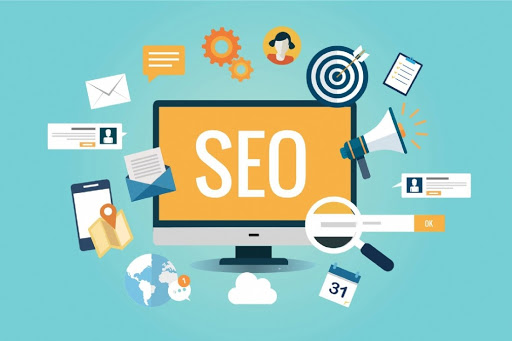
What is SEO and how it works? is searched often in google and you can find result like: SEO stands for “Search Engine Optimization.” It means the process of improving your site to increase its visibility for relevant searches. The better visibility your pages have in search results, means you can attract prospective and existing customers to your business. How does SEO work? Search engines such as Google and Bing use bots to crawl pages on the web, going from site to site, collecting information about those pages and putting them in an index. Next, algorithms analyze pages in the index, taking into account hundreds of ranking factors or signals, to determine the order pages should appear in the search results for a given query. Content quality and keyword research are key factors of content optimization, and crawlability and mobile-friendliness are important site architecture factors on SEO. The search algorithms are designed to surface relevant, authoritative pages and provide users with an efficient search experience. Optimizing your site and content with these factors in mind can help your pages rank higher in the search results. Unlike paid search ads, you can’t pay search engines to get higher organic search rankings. Why is SEO important for marketing? SEO is a fundamental part of digital marketing because people conduct trillions of searches every year, often with commercial intent to find information about products and services. Search is often the primary source of digital traffic for brands and complements other marketing channels. Greater visibility and ranking higher in search results than your competition can have a material impact on your bottom line. However, the search results have been evolving over the past few years to give users more direct answers and information that is more likely to keep users on the results page instead of driving them to other websites. Also note, features like rich results and Knowledge Panels in the search results can increase visibility and provide users more information about your company directly in the results.
A
Written by
Admin

Contributor at EdTecInfo. Writing about education, technology, and productivity for Nepali readers.

Swipe up, left, or right for the next story
Info

What is digital marketing?

These days digital marketing is getting popular and many people seems to be searching What is digital marketing?. We can get result like Achieving marketing objectives by applying digital technologies and media is c

AAdminFeb 25, 2021
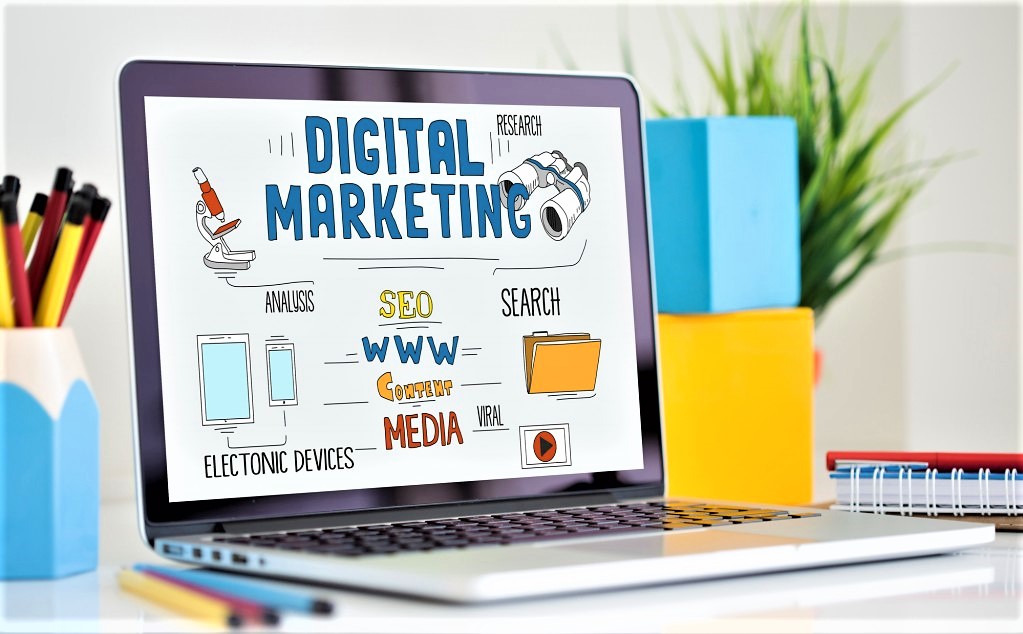
These days digital marketing is getting popular and many people seems to be searching What is digital marketing?. We can get result like Achieving marketing objectives by applying digital technologies and media is called Digital Marketing. This is in conjunction with online communications techniques including the likes of search engine marketing, social media marketing, online advertising, e-mail marketing and partnership arrangements with other websites. These days social media marketing like Facebook, Instagram, YouTube Advertisement (Boosting) are getting popular among us. Digital Marketing means: Identifying – the internet can be used for marketing research to find out customers’ needs and wants Anticipating – the Internet provides an additional channel by which customers can access information and make purchases – evaluating this demand is key to governing resource allocation. Satisfying – a key success factor is achieving customer satisfaction through the appropriate channel, which raises issues such as: is the site easy to use, does it perform adequately, what is the standard of associated customer service and how are physical products dispatched? So, digital marketing is about utilizing digital technology to achieve marketing objectives. There is no essential need for digital to always be separate from the marketing department as a whole, as the objectives of both are the same. However, for now, it remains a useful term because digital requires a certain skill set to utilize digital technology effectively.
A
Written by
Admin

Contributor at EdTecInfo. Writing about education, technology, and productivity for Nepali readers.